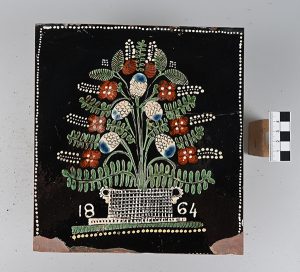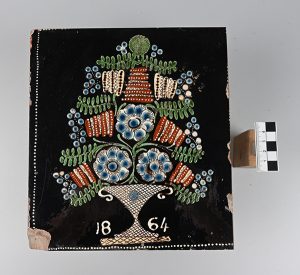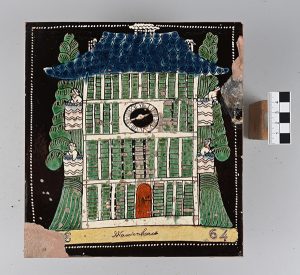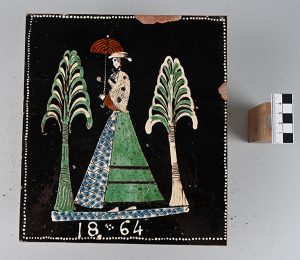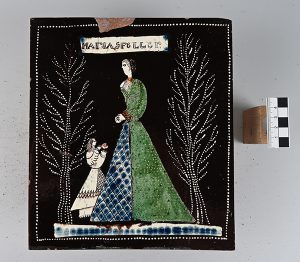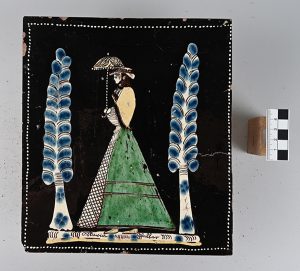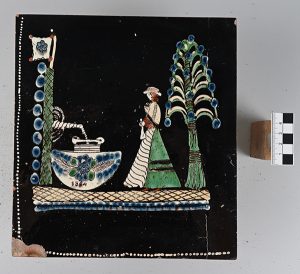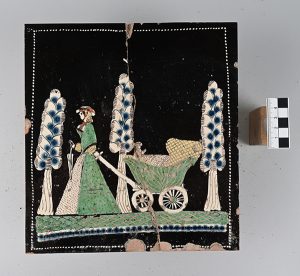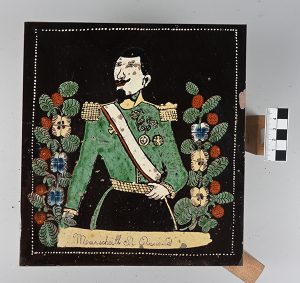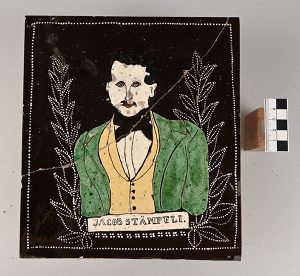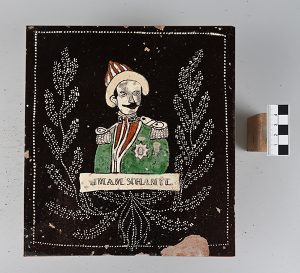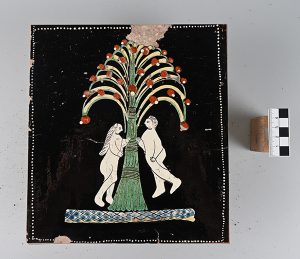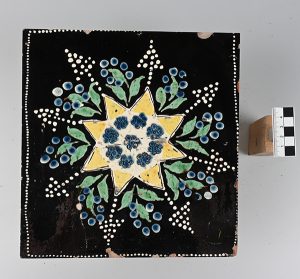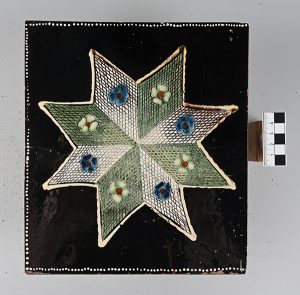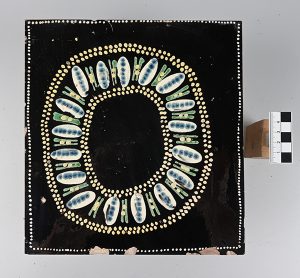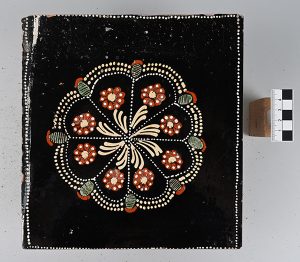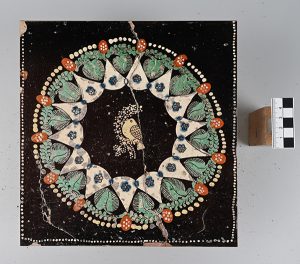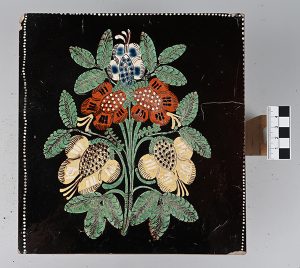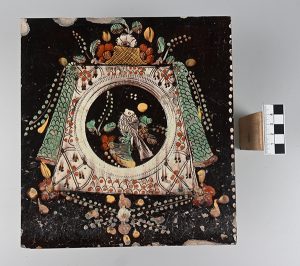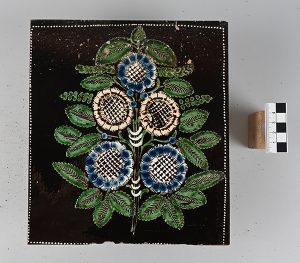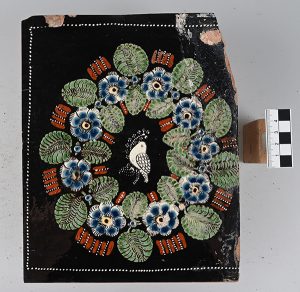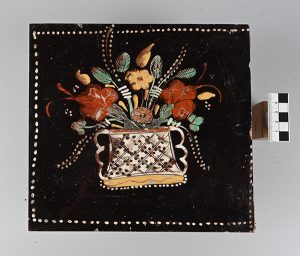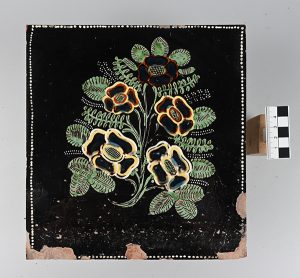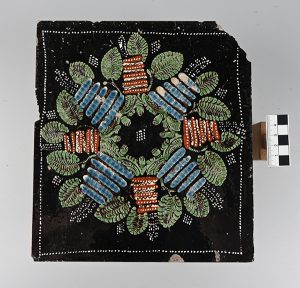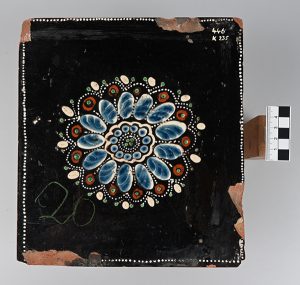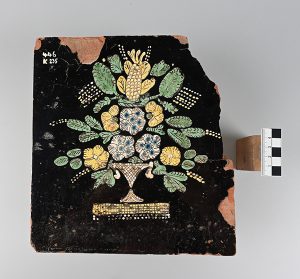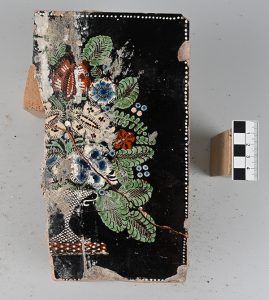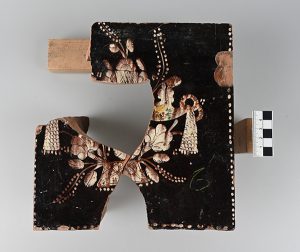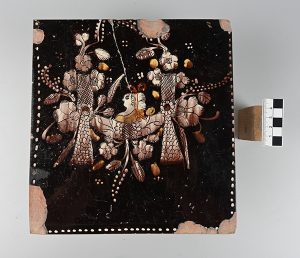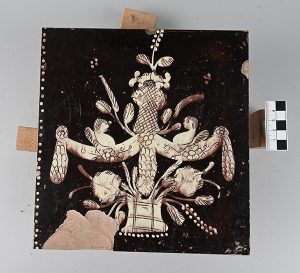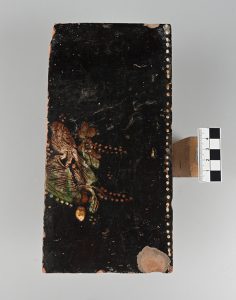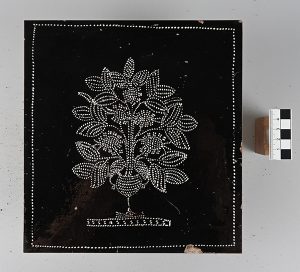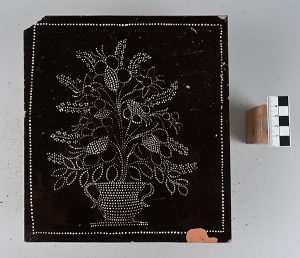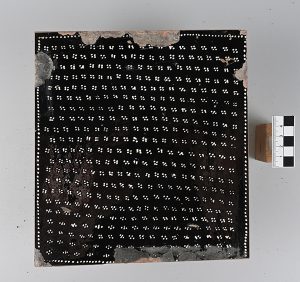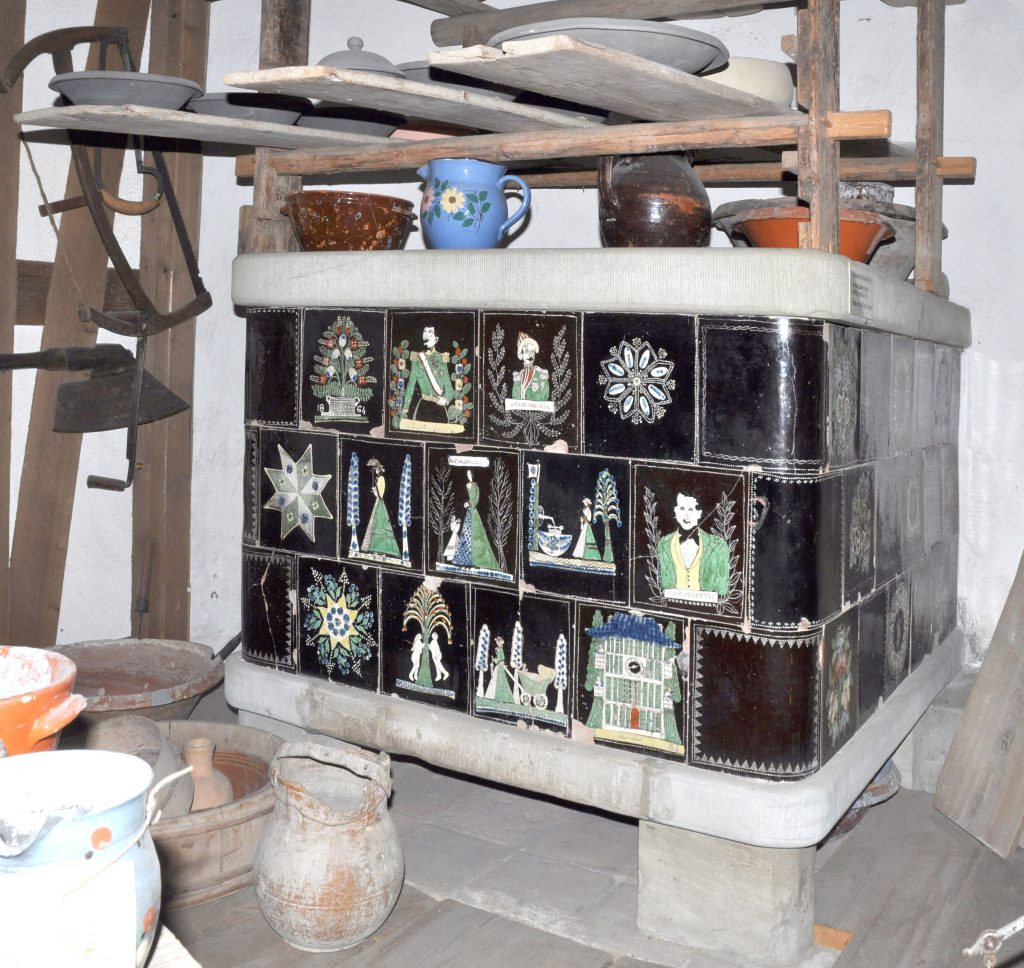
Tiled stove used for drying unfired vessels at the Küenzi workshop “im Lädeli” at 229 Bernstrasse in Heimberg, dated 1864. The picture shows the reconstructed stove at the Castle Museum of Thun, sometime after 1959. Unfortunately, it has since been dismantled (SST-00446).
Andreas Heege, 2026
The production or fitting of tiled stoves did not, in general, play a significant role in Heimberg. There were, however, a few exceptions, for instance, what used to be Johannes Küenzi’s workshop at 229 Bernstrasse in Heimberg (Buchs 1970, SST-00446).
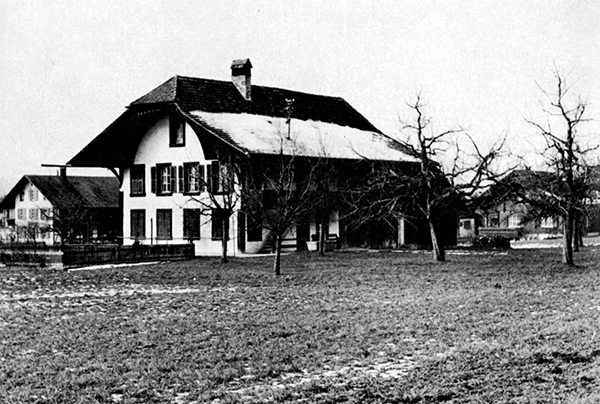
Heimberg, 229 Bernstrasse, shortly before it was demolished (Buchs 1970, Fig. 1).
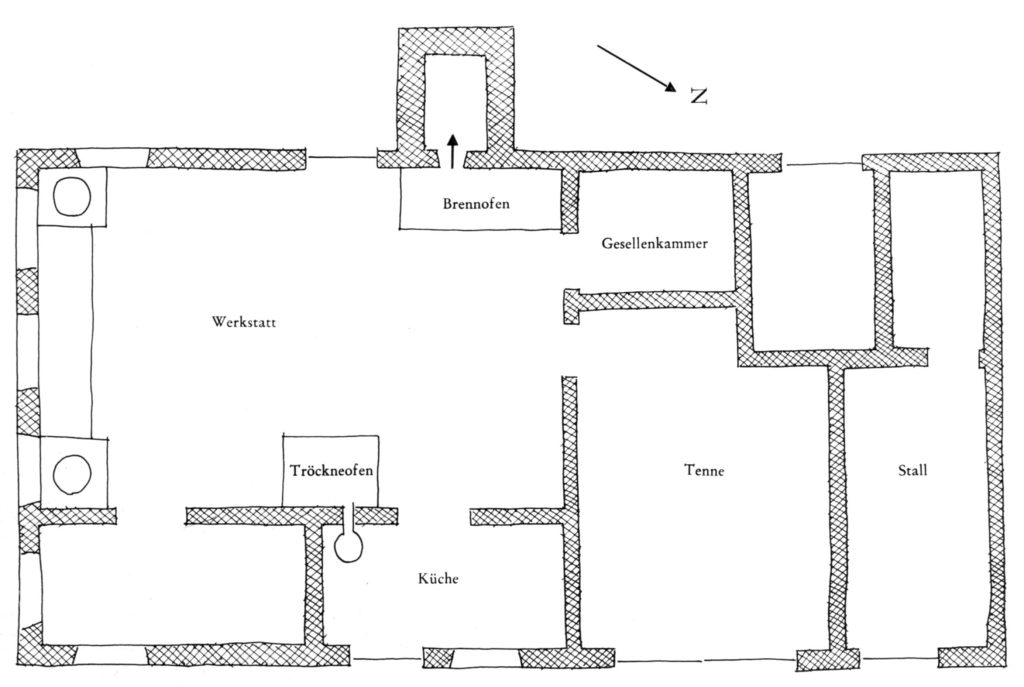
Heimberg, 229 Bernstrasse, ground-floor plan with the typical layout of a potter’s house in Heimberg (Buchs 1970, Fig. 2).
Four generations of Küenzi potters from Uebeschi produced pottery in Heimberg and Steffisburg. At times, as many as four brothers were active. Their workshops were located at 206 and 238 Bernstrasse in Steffisburg and at 229 Bernstrasse in Heimberg. The tiled stove dated 1864 was used as a “drying stove” at the latter workshop, which ceased operation in 1945. Because it has been dismantled and is now in storage (SST-00446), its main tiles are shown here without any further comment, as the date of the stove itself provides an important clue with regard to the stylistic developments in Heimberg around 1864. We have nothing to add, either culturally or historically, to the 1970 essay by Herrmann Buchs.
Translation Sandy Hämmerle
References:
Buchs 1970 Hermann Buchs, Ein Heimberger Tröckneofen. Historisches Museum Schloss Thun, 1970, 4-17.