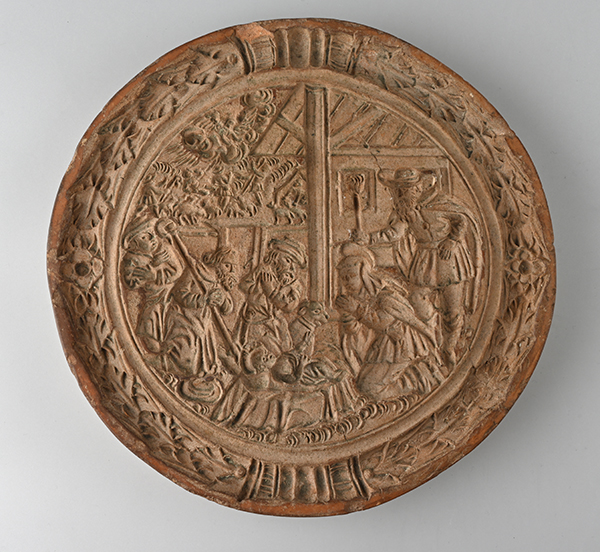
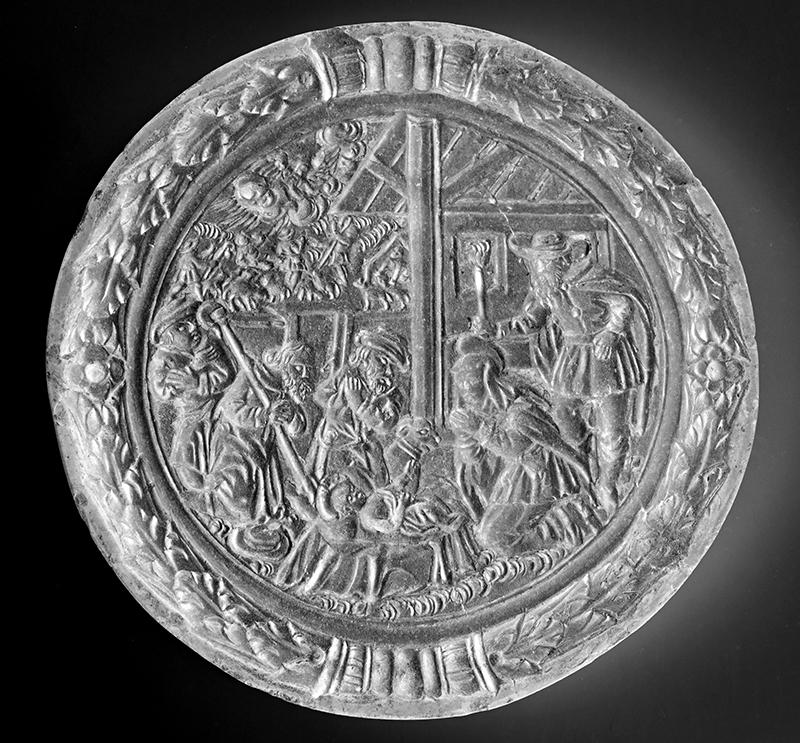
The Adoration of the Shepherds in the Stable at Bethlehem (SST 00975).
Andreas Heege, 2026
Active from at least 1643, the Stüdlin mould makers’ workshop in Lohn near Schaffhausen was known all over the German-speaking part of Switzerland for its wide-ranging collection of beautiful moulds (Widmer/Stäheli 1999; Stäheli/Widmer 2020; see also: Grütter 2010; Grütter 2016-2017). Unfortunately, to date, no complete catalogue of motifs has been compiled.
From the 15th century onwards, if not earlier, moulds made from a variety of materials (stone, metal, wood, pottery) and of different sizes were used, both in private households and in professional contexts (Lebkuchen or gingerbread bakers, Honigkuchen bakers, apothecaries) throughout central Europe, to decorate food, and pastries in particular. The moulds were made by specialist block-cutters, carvers or mould makers who produced near-identical motifs, both as negatives carved in wood and as ceramic patrices that were then used to create moulds. The moulds, wooden or ceramic, were used to decorate Spekulatius (Biscoff), Lebkuchen (gingerbread), Biber (gingerbread filled with almond paste), Tirggel (honey biscuits from Zurich) or Springerle/Anisbrötchen (anise biscuits), bake Mandelkäse or Eierkäse (baked goods made from eggs, milk and almonds), form marzipan and tragacanth (Brunold-Bigler 1985; Klever 1979; Widmer/Stäheli 1999, 29, 32-37), or to make quince cheese or paste, a type of sweet jelly (electuary) made from the pulp of the quince fruit (Bernerisches Koch-Büchlein 1749, recipe no. 303; Morel 2000, 101). Naturally, the same moulds could be used to make wax pictures or to decorate candles, and when pressed into clay, to create relief decoration on pottery (Heege/Kistler 2017b, 244-248, Figs. 335 and 345, 590 Fig. 715; Widmer/Stäheli 1999, 37-38).
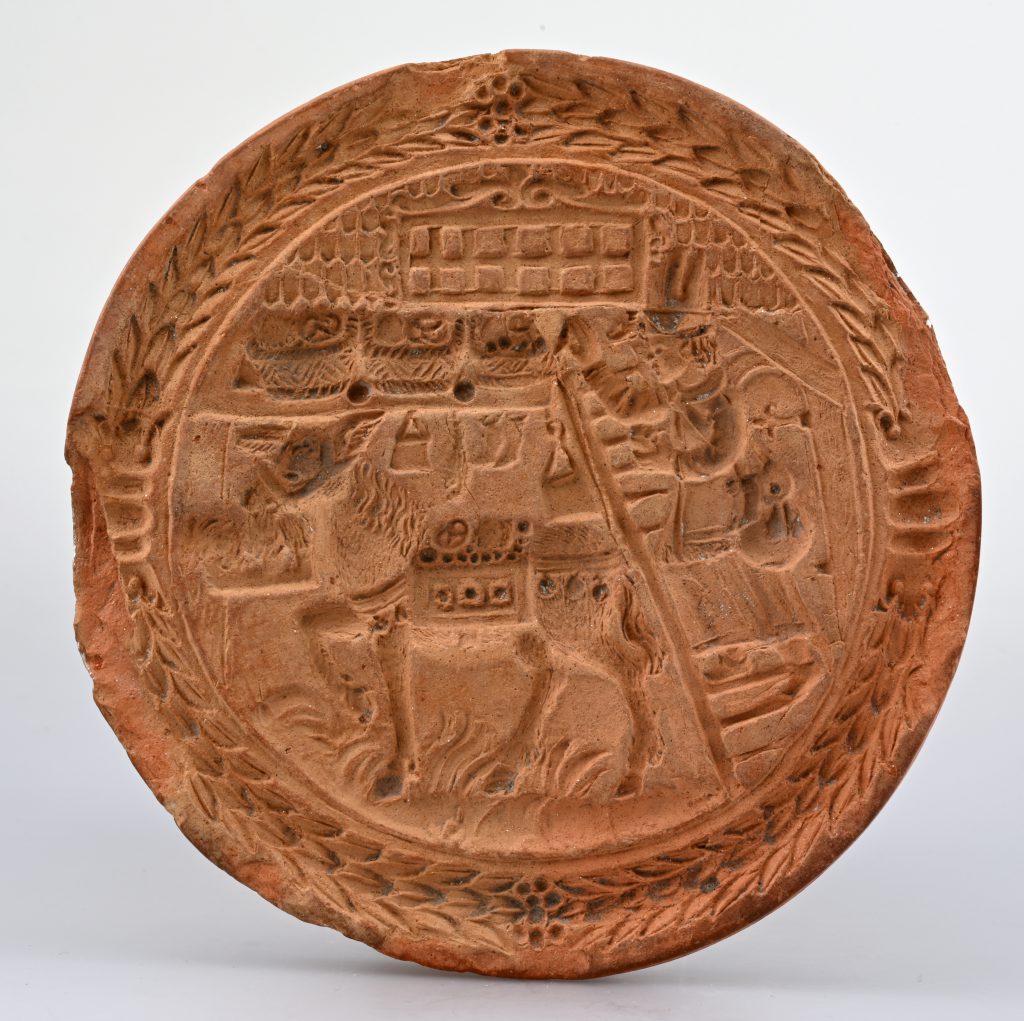
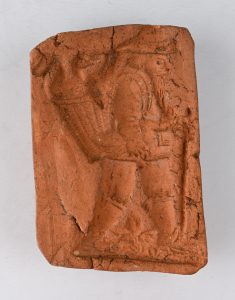
Saint Nicholas of Myra climbs up a ladder to fill baskets, bags and stockings with sweets for all the children. His donkey is already carrying a load and getting his fill of hay from a manger while he is waiting for Nicholas to finish packing (RMC XI.A414).
Perhaps the oldest mould documented so far in CERAMICA CH probably dates from the 17th century. It shows Saint Nicholas of Myra climbing a ladder to fill baskets, bags and stockings with sweets for all the children. The collection of the Swiss National Museum (SNM DEP-1150) includes a similar wooden mould bearing the Werdmüller-Zollikofer arms of alliance (c. 1675). For stylistic reasons, we can assume that the mould shown here came from the Stüdlin mould makers’ workshop in Lohn near Schaffhausen (Widmer/Stäheli 2020 – See also: Stäheli/Widmer, cat. 99). The same workshop probably created other glazed or unglazed moulds housed in various museums whose collections we have already catalogued.
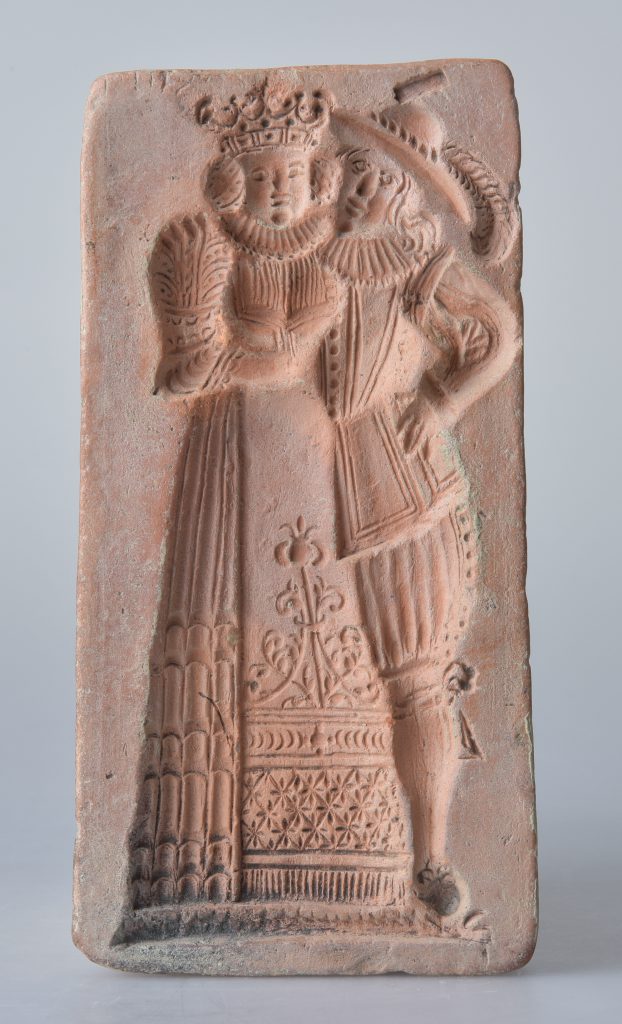
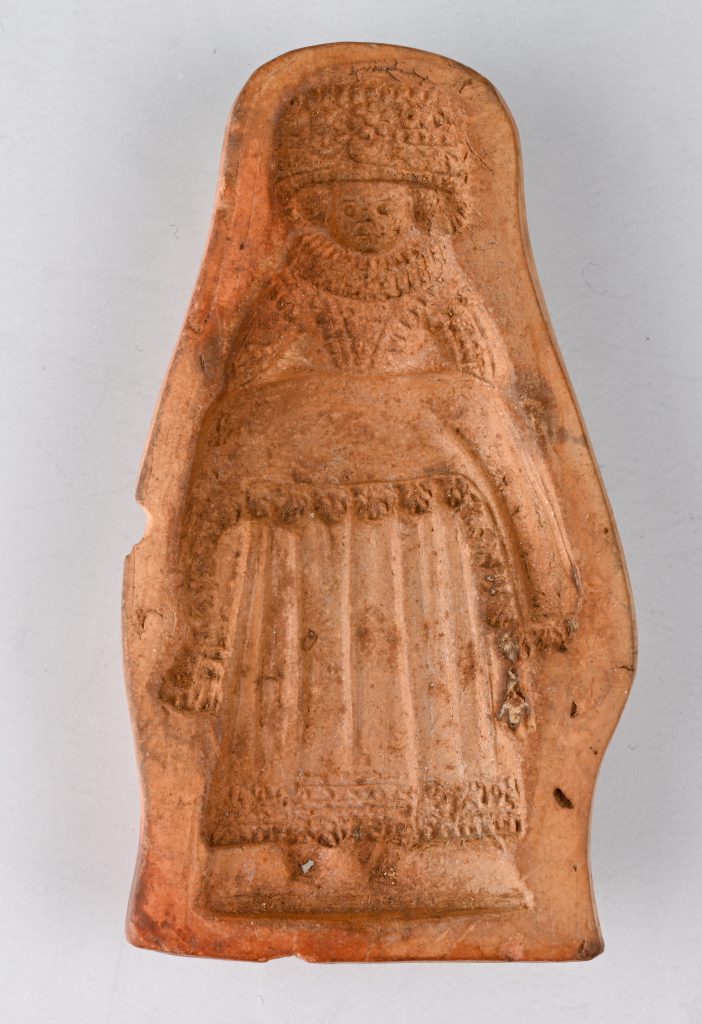
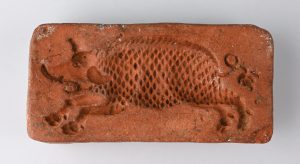
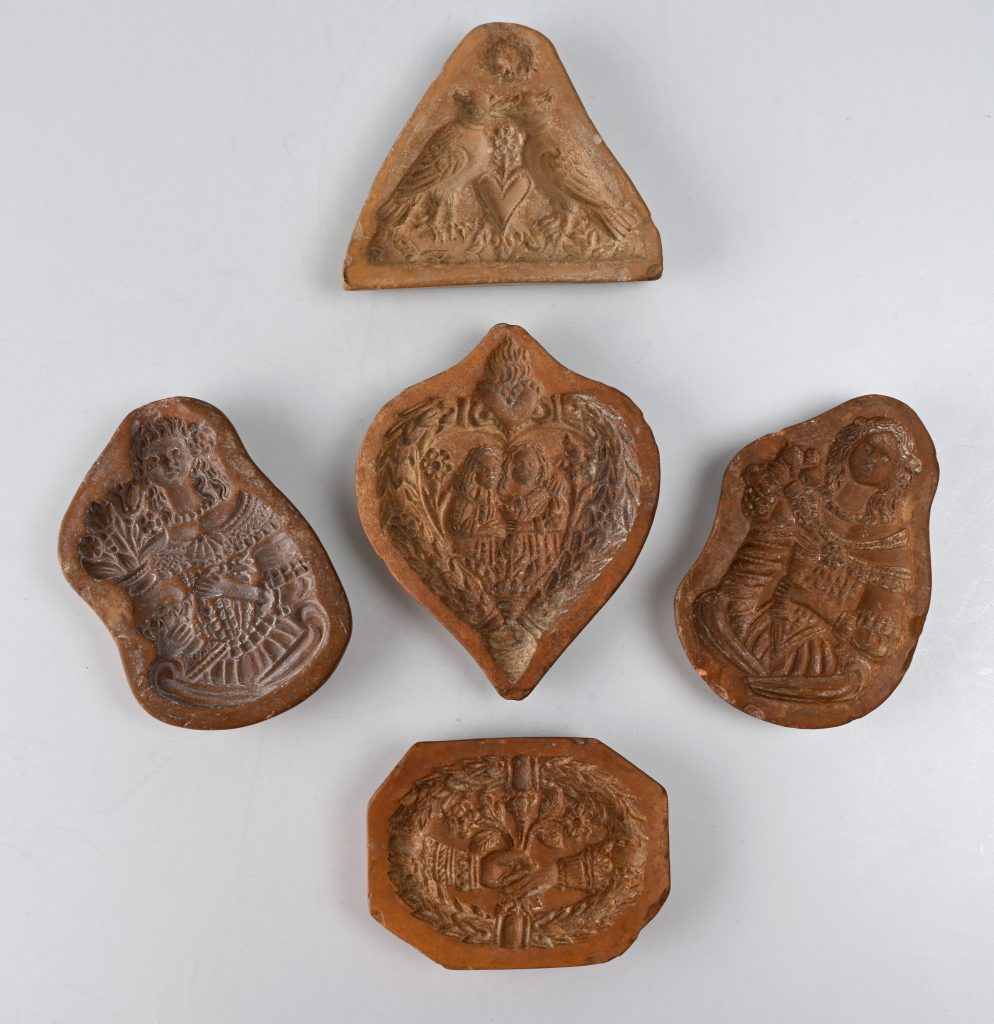
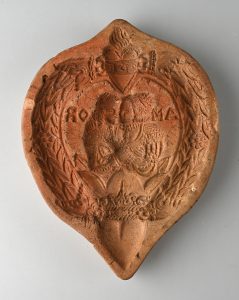
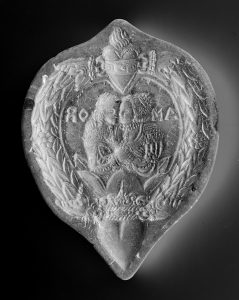
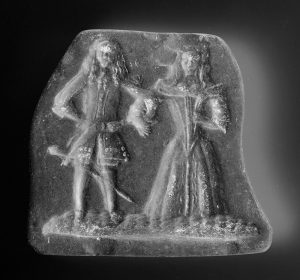
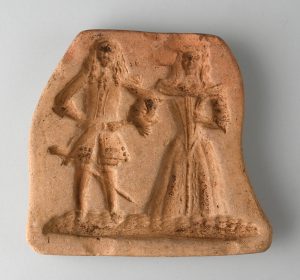
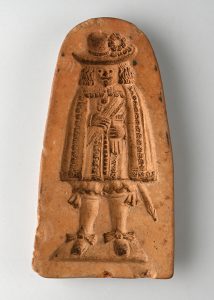
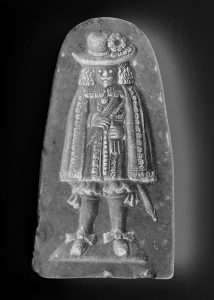
Love and fidelity are recurring themes. Many of the objects show details of clothing and traditional costumes dating from the 17th century. In Swiss museum collections, the products from the workshop, including numerous signed patrices as well as moulds, are usually labelled simply as “Lohn moulds”, although this attribution has so far only been made on stylistic grounds, since no archaeological finds from Lohn itself, for instance, have yet come to light. The majority of moulds are unglazed and made from a fine clay that turns reddish when fired.
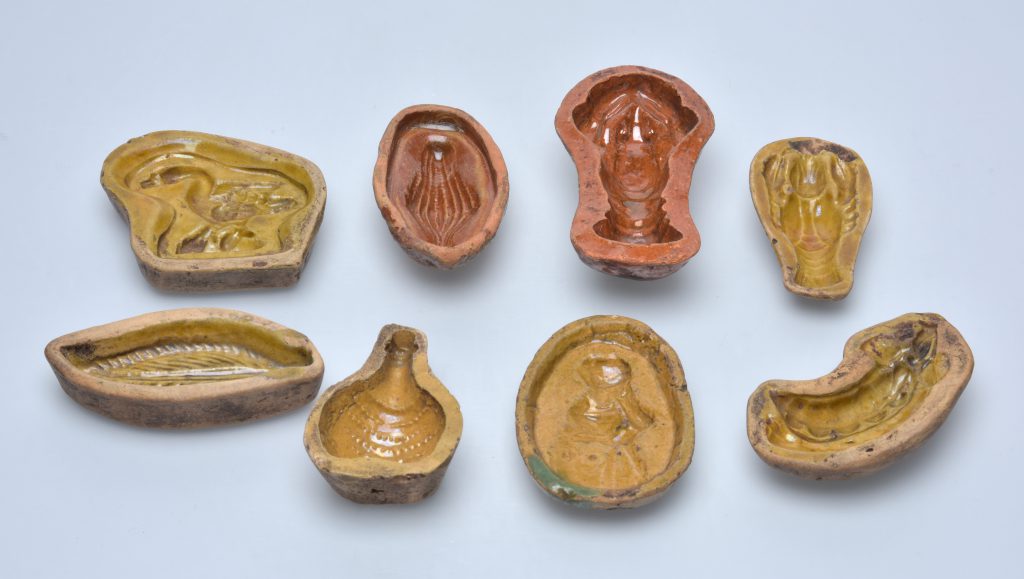
A special category of moulds that are often a little simpler in shape and glazed on the inside were probably used mainly in the production of fruit jelly or quince cheese. It is not clear if these were also produced in Lohn (Widmer/Stäheli 1999, 34) or if they might have actually been made at other workshops in Switzerland or southern Germany.
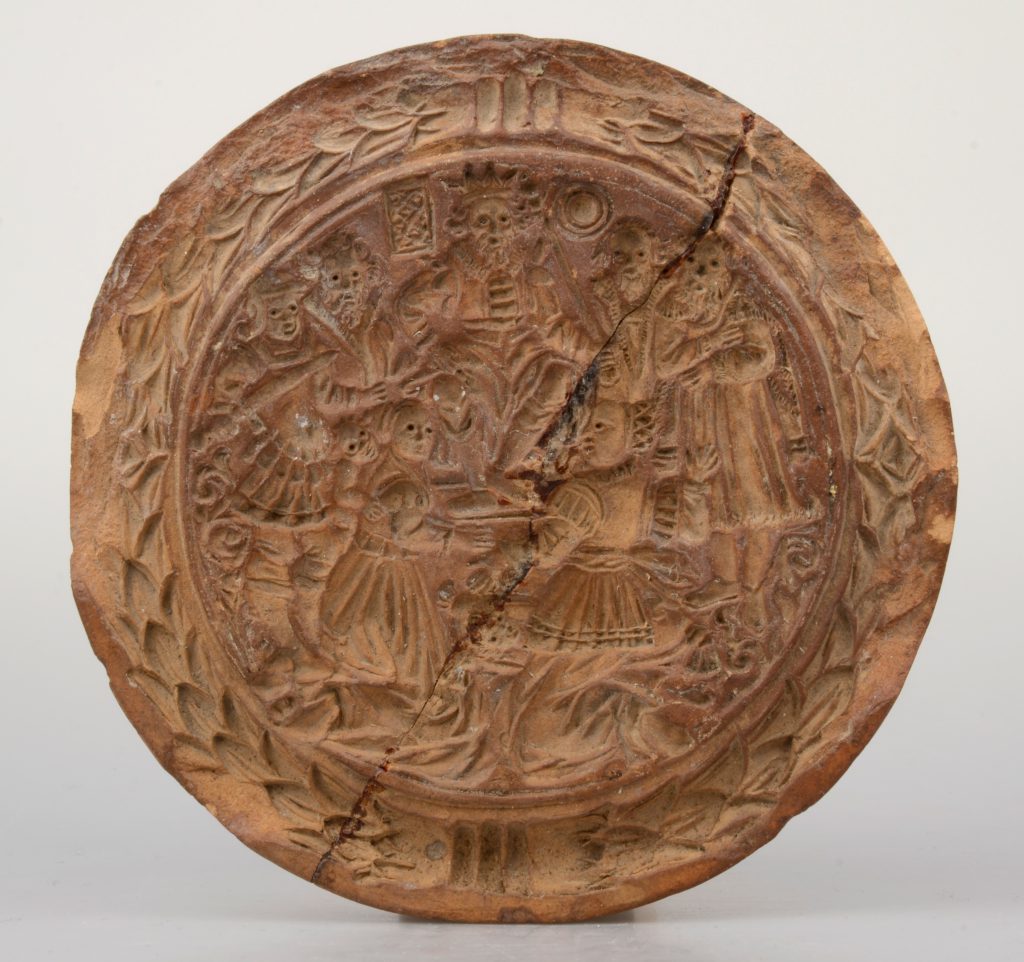
The “Judgement of Solomon” (Bible; 1 Kings 3, 16-28): Two women come to Solomon with a dispute over a child. The story and Solomon’s solution to the case became a well-known motif in world literature, the “Solomonian Judgement”. In the story, Solomon is wisdom and justice personified (ME-STM 1646).
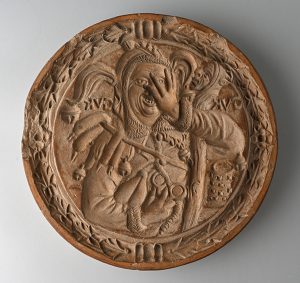
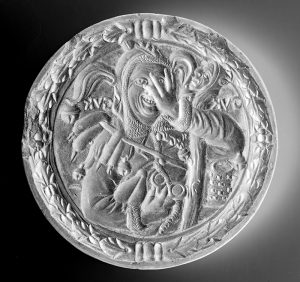
“Peeping through one’s fingers” (SST 00979)
Sometimes the images are ribald or satirical. This mould shows a man in a jester’s costume (the fool’s cap has a cockscomb crest and bells on the collar) and holding a fool’s sceptre in the crook of his arm and spectacles in his hand. His other hand is held in front of his face, and he is peeping out through his fingers. There is what appears to be a cylindrical wafer cup on a table next to him and under his arm he has a pointed loaf of “bread” that is split in the middle. Two “sausages” are dangling from a string around his neck. The scene is accompanied by the words “GUK GUK”. The fact that the jester is “peeping through his fingers” suggests that he is a weak man, who knows about his wife’s infidelity but does not want to see it (he has taken his spectacles off) and so allows her to get away with it (Sebastian Brandt, Das Narrenschiff, 33rd image). The inscription “GUK GUK” can be read here as the cuckoo’s call. In medieval German usage, “making someone a cuckoo” meant that they were being cheated on (“cuckold” in English usage) and the cockscomb on the jester’s cap refers to the German term “Hahnrei” for cuckold and sometimes the person who had allowed himself to be cheated on was called a “Kuckuck” (cuckoo) (Deutsches Wörterbuch von Jacob und Wilhelm Grimm. Lfg. 11, Bd. V (1873), s.v. “Kuckuk”).
With regard to a group of rather large, round moulds with laurel wreaths on the outside one might wonder whether some could be older than the first archival record for the Stüdlin workshop which dates from the 1650s. The Museum Allerheiligen in Schaffhausen, for example, has dated wood and metal moulds from the mid-16th century with the same designs.
Translation Sandy Haemmerle
References:
Bernerisches Koch-Büchlein 1749
Bernerisches Koch-Büchlein (Nachdruck 1970), Bern 1749.
Brunold-Bigler 1985
Ursula Brunold-Bigler, “Trukhs in die Mödel”: Bemerkungen zur Gebäckmodelsammlung des Rätischen Museums, in: Jahrbuch der Historisch-Antiquarischen Gesellschaft von Graubünden 115, 1985, 43-66.
Grütter 2010
Daniel Grütter, Schaffhauser Gebäckmodel aus Holz und Ton, in: Schweizerische Institut für Kunstwissenschaft (Hrsg.), Meisterwerke und Kleinode. Sammlung der Peyerschen Tobias Stimmer-Stiftung, Museum zu Allerheiligen, Schaffhausen. Gesamtkatalog (Zürich 2010) 84-87, 136-137.
Grütter 2017-2018
Daniel Grütter, Gebäckmodelsammlung Messikommer. Jahrbuch der Sturzenegger-Stiftung, 2017-2018, 204-225.
Heege/Kistler 2017
Andreas Heege/Andreas Kistler, Keramik aus Langnau. Zur Geschichte der bedeutendsten Landhafnerei im Kanton Bern (Schriften des Bernischen Historischen Museums 13), Bern 2017.
Klever 1979
Ulrich Klever, Alte Küchengeräte, München 1979.
Morel 2000
Andreas Morel, Basler Kost. So kochte Jacob Burckhardts Grossmutter (178. Neujahrsblatt, herausgegeben von der Gesellschaft für das Gute und Gemeinnützige), Basel 2000.
Widmer/Stäheli 1999
Hans Peter Widmer/Cornelia Stäheli, Schaffhauser Tonmodel. Kleinkunst aus der Bossierer-Werkstatt Stüdlin in Lohn, Schaffhausen 1999.
Stäheli/Widmer 2020
Cornelia Stäheli/Hans Peter Widmer, Honig den Armen, Marzipan den Reichen. Schweizer und Zürcher Gebäckmodel des 16. und 17. Jahrhunderts (Zürich 2020).

