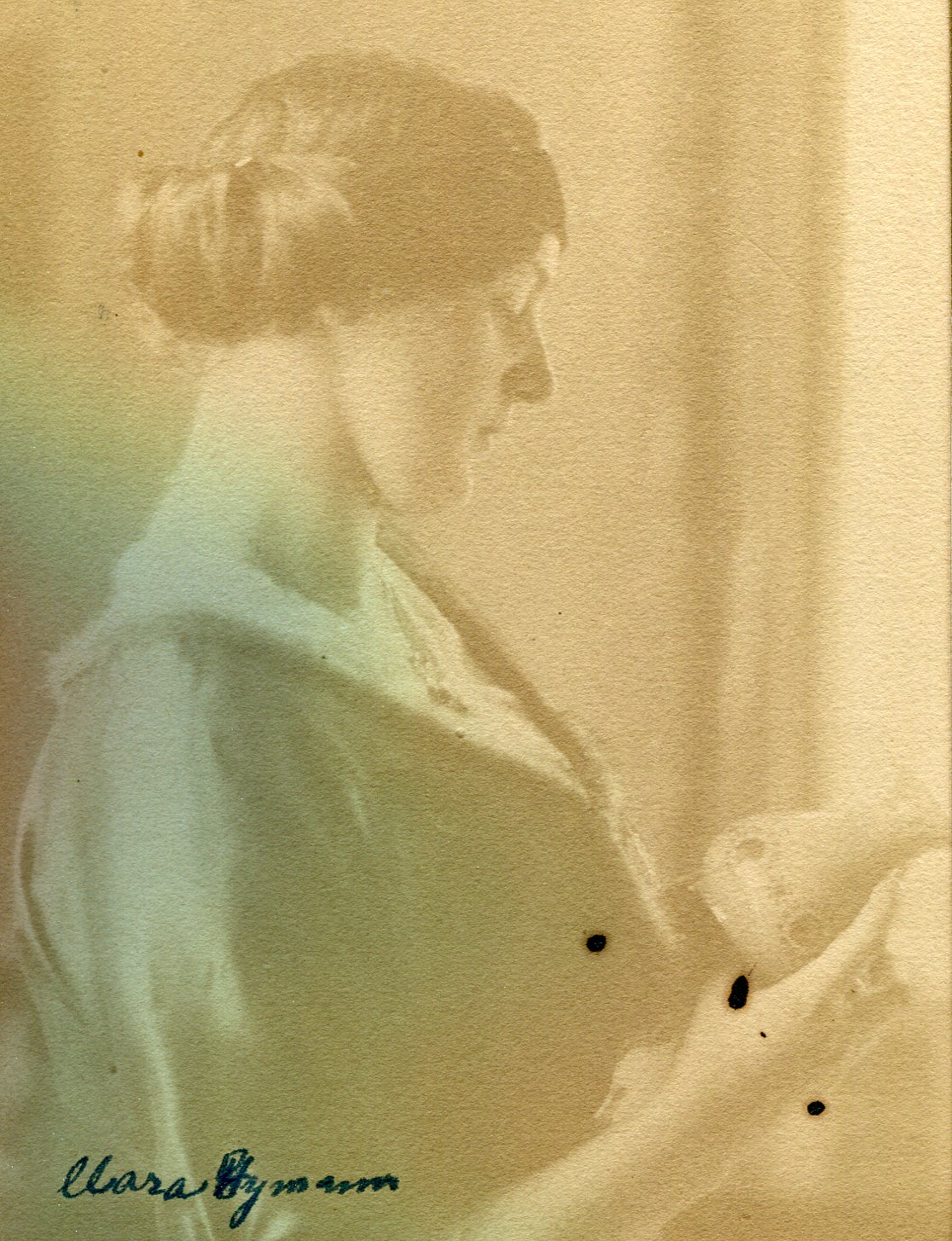
Clara Eymann (probably around 1914) holding a vase with Bern-style slip-trailed decoration.
Andreas Heege with support from Anna Stuby, 2024
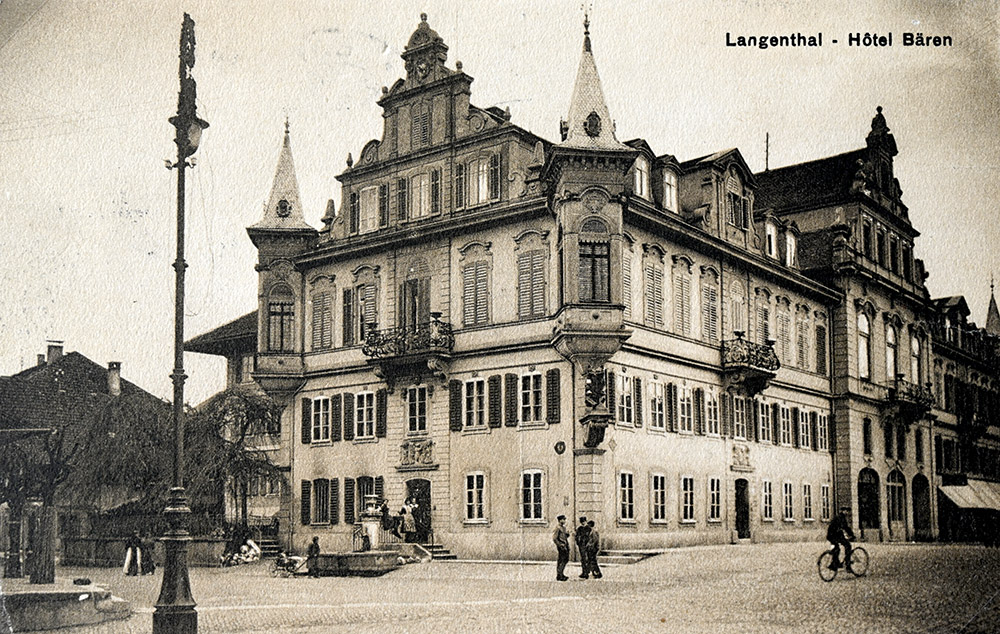
Clara Eymann was born in Langenthal (on 11th October 1892; died on 23rd February 1984 in Zurich). Her parents, Robert and Anna Eymann-Sommer were the second-generation owners of the renowned guesthouse “Bären” in Langenthal.
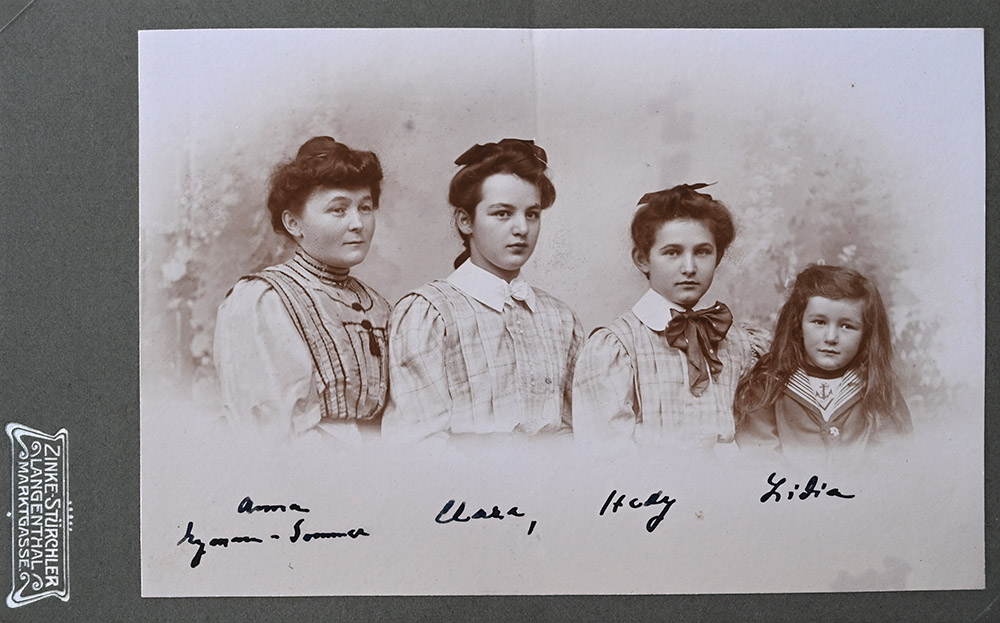
Clara had two sisters. One of them, Lydia Eymann (14th June 1901 – 1st March 1972), was an artist, caricaturist and well-known personality in Langenthal.
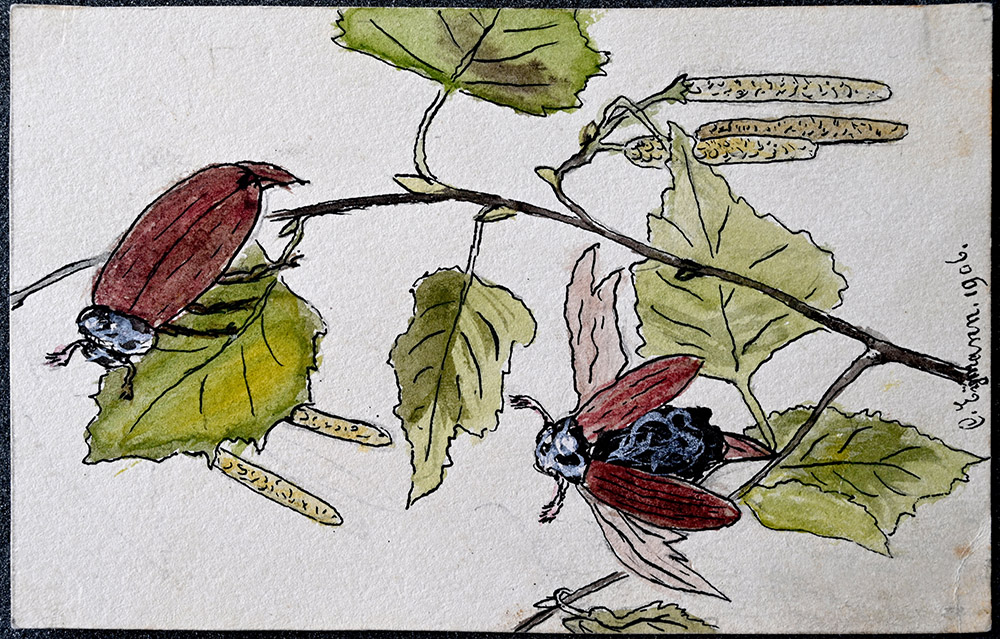
Clara’s artistic talent for painting was recognised and encouraged from an early age.
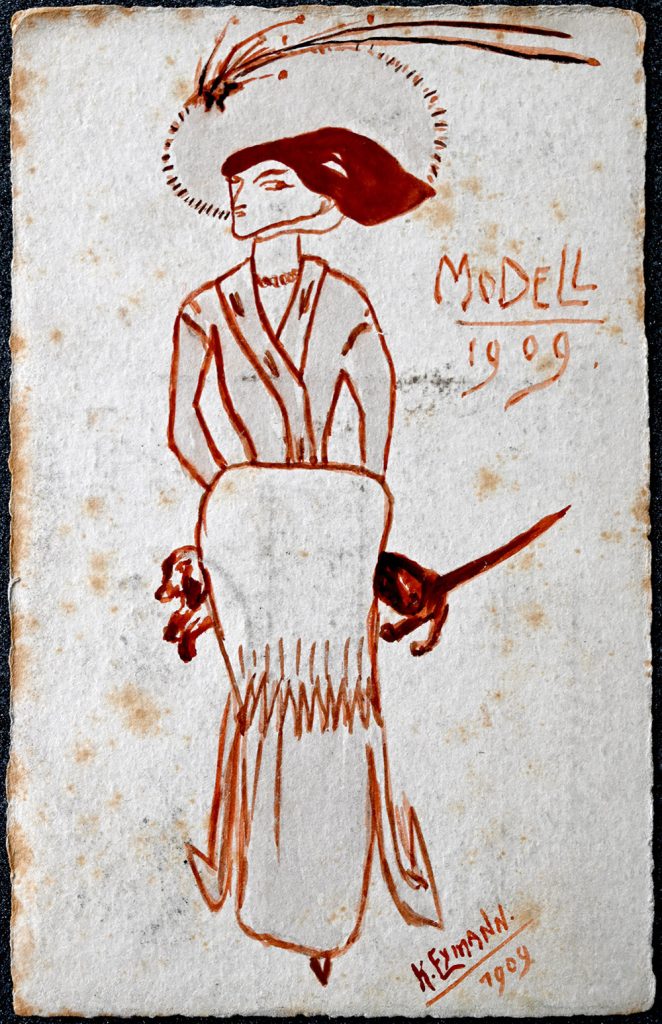
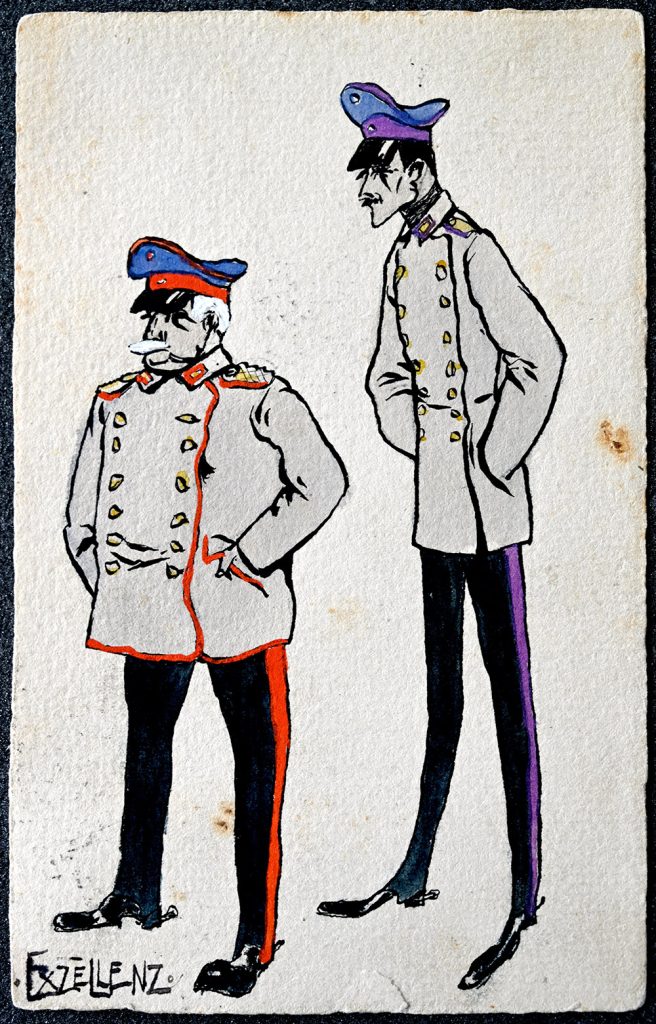
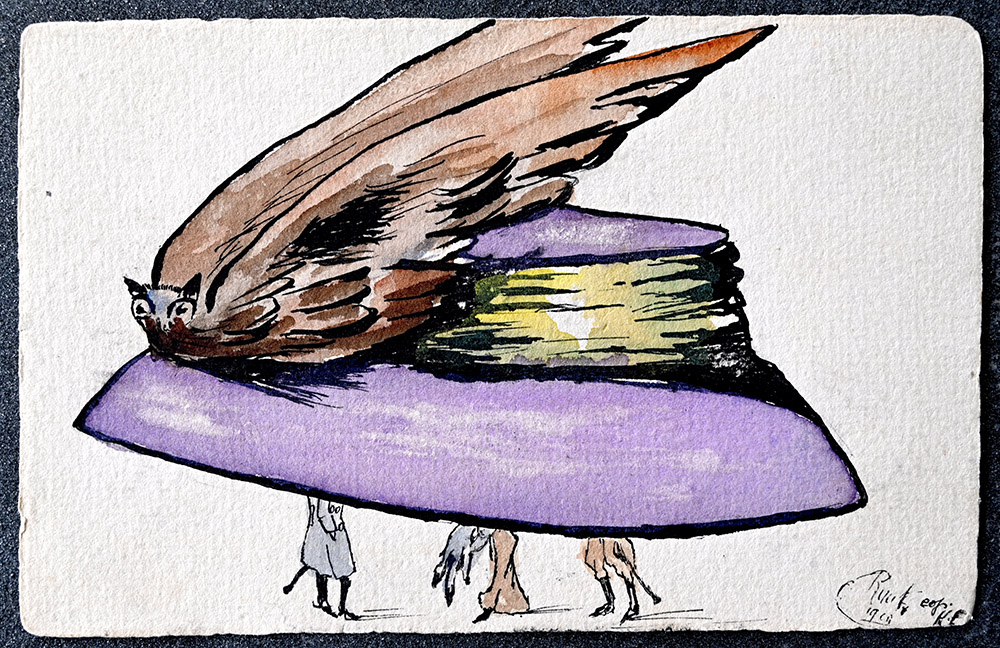
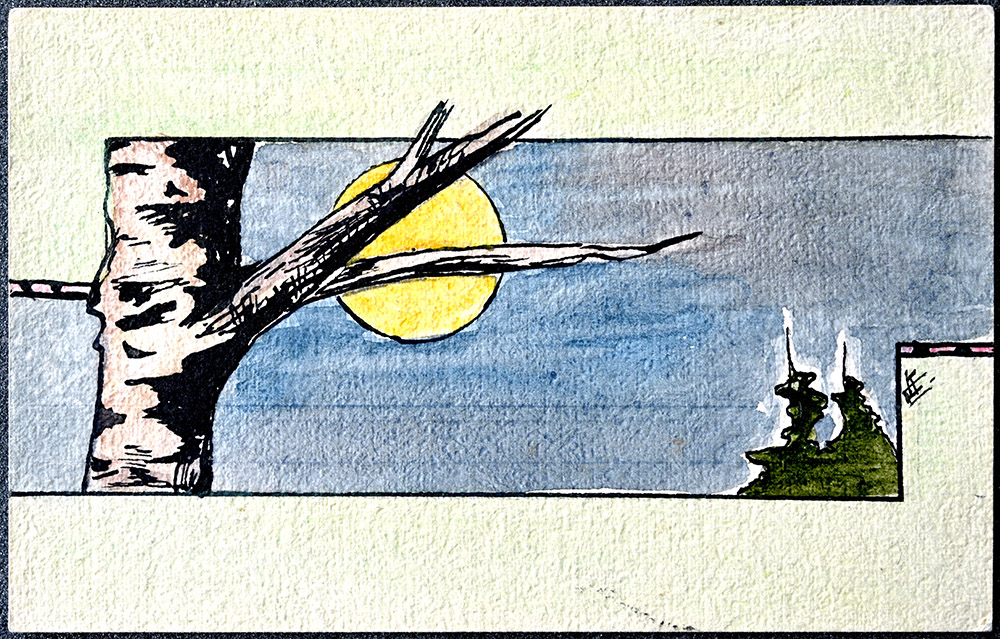
1908 Clara attended the Ecole d’Arts et Métiers in Lausanne and was tutored by the ceramicist Nora Gross.
1912 Further training (oil and landscape painting) followed at the Polytechnic School of Art in London.
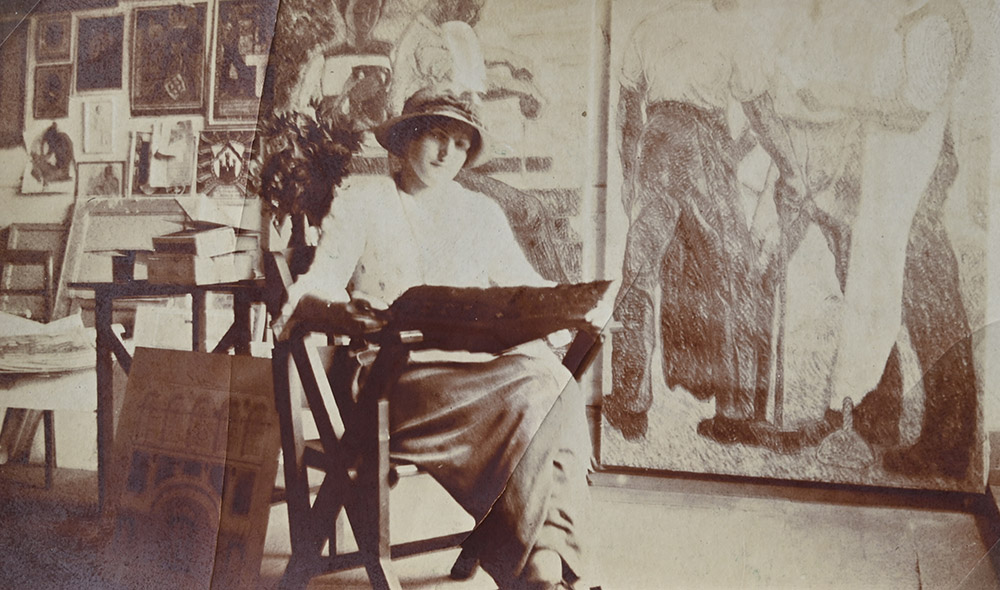
Clara Eymann at Ernst Linck’s studio.
Later she became a student of the painter Ernst Linck (1874-1935) in Bern. Linck was a close friend of Ferdinand Hodler (1853-1918) and the two were members of the “Bern School” art movement.
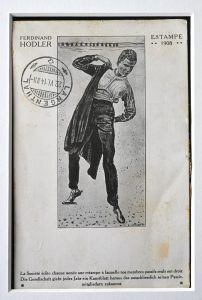
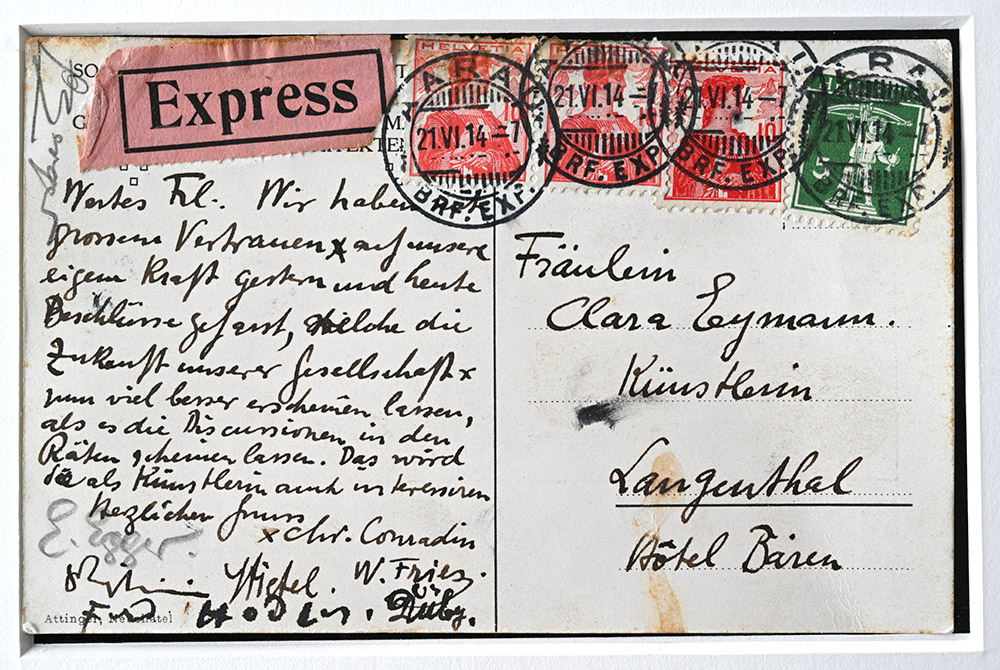
As an artist, Clara came into contact with various big names from the Swiss arts scene very early on in her career (express post card sent after association meeting, signed by Ferdinand Hodler, Christian Conradin, Willy Fries, Sigismund Righini and others).
1914 Clara Eyman was awarded a bronze medal at the Swiss National Exhibition in Bern for her ceramic works. She also sold her wares at the bazaar “Im Dörfli”. While we do not know exactly what she exhibited and sold there, her early ceramics probably included mainly slip-trailed vessels signed “CE”.
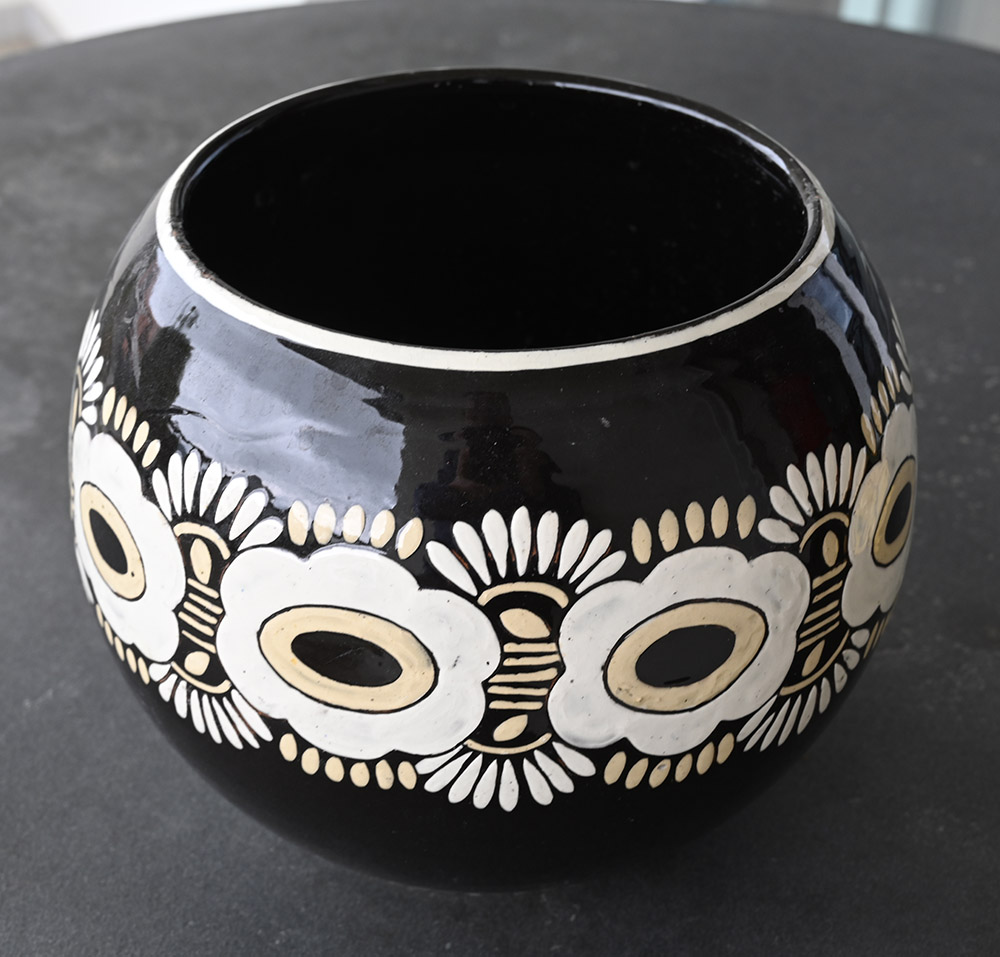
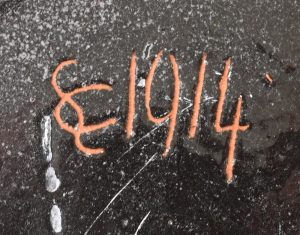
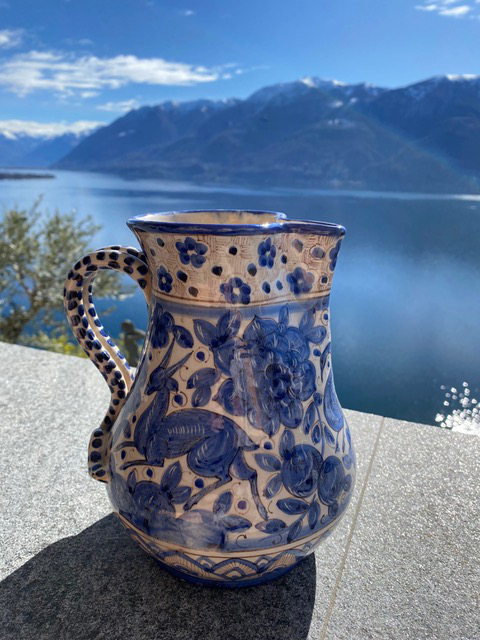
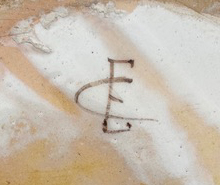
A large jug in the family collection also shows her artistic talent in faience painting.
1915 Clara married Constanz Amanz Vogelsang from Solothurn. He was director of the Allgemeine Plakatgesellschaft APG in Zurich and an important patron and friend of the arts. The couple lived in Zurich where they owned a house on Klusstrasse. Both were in contact with numerous Swiss artists who always found an open door in Zurich. In 1925, Clara was one of the co-founders of the Zurich branch of the Gesellschaft Schweizer Malerinnen, Bildhauerinnen und Keramikerinnen GSMBK (Swiss Society of Female Painters, Sculptors and Ceramicists), having probably served previously as a member of the Swiss governing body of the GSMB+K. She was also a member of the Schweizerischer Werkbund (SWB).
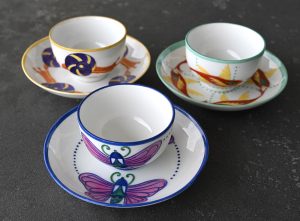
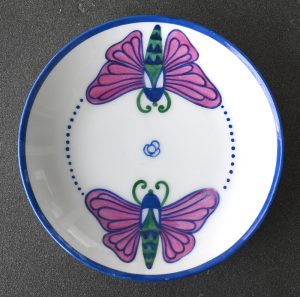
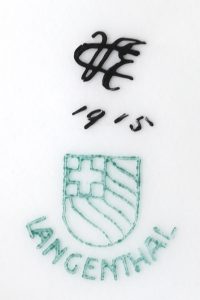
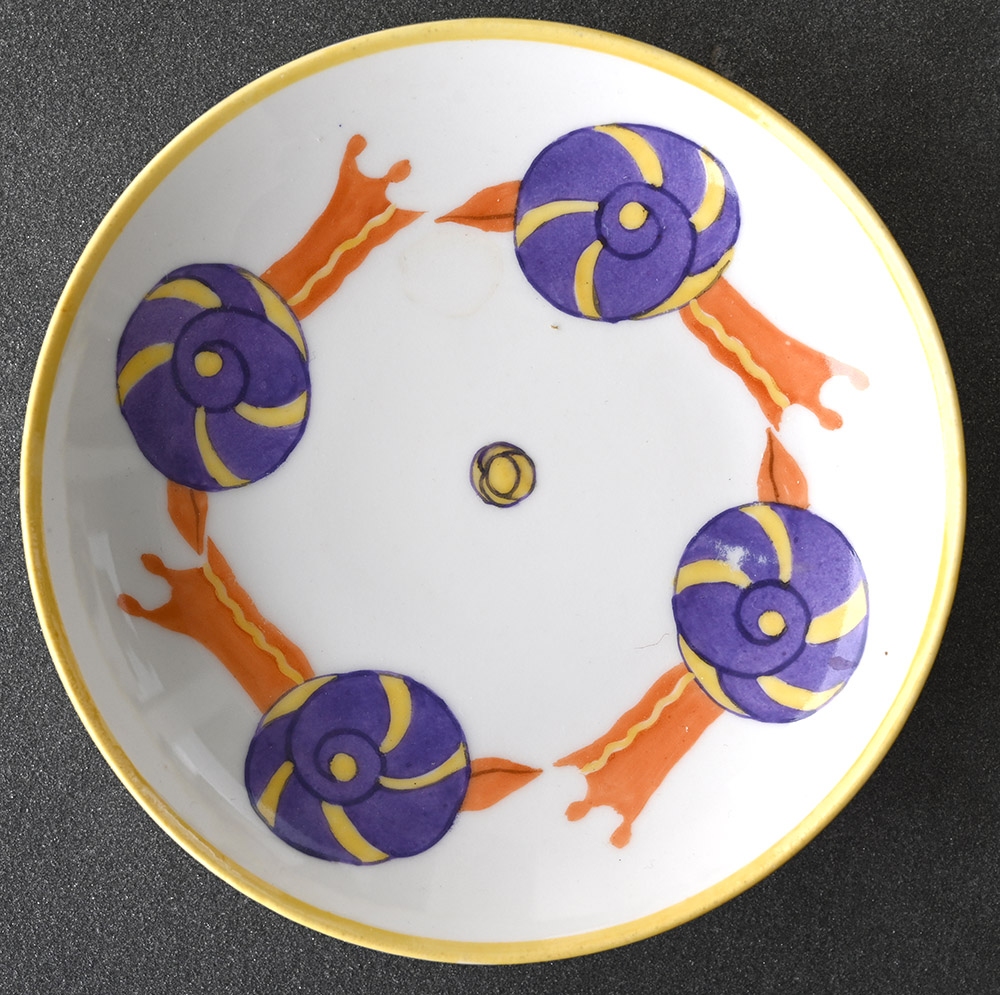
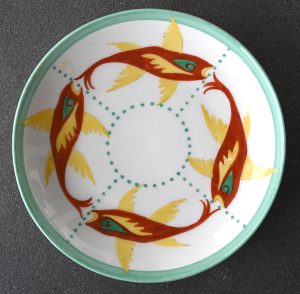
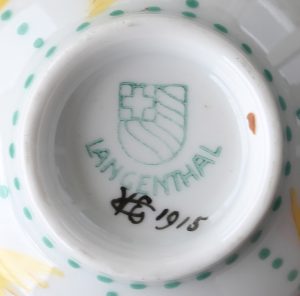
1915 This series of painted beakers and saucers made of Langenthal porcelain dates from the year she got married.
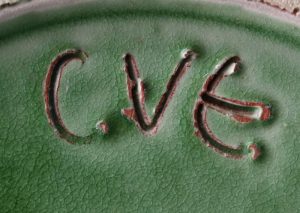
Clara Vogelsang never had a workshop of her own and always worked from her home studio or at the workshops of the companies Wächter in Zurich or Feldmeilen and Haussmann in Uster (Die Tat, 6th October 1972). When she got married, she changed her mark to “CVE” and sometimes used just “CV”. Three of the ceramic objects that have survived may date from her collaboration with the company Wächter in Feldmeilen.
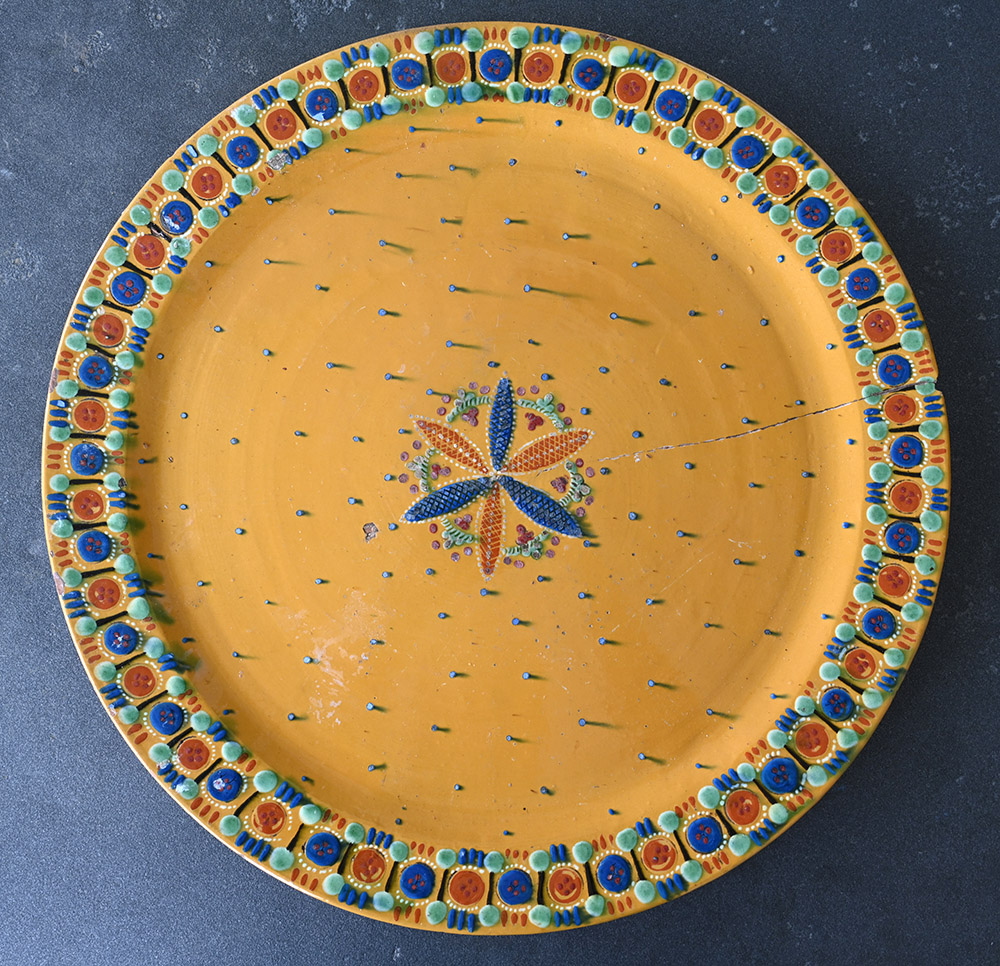
Nach einer Familientradition entstand diese unsignierte grosse Kuchenplatte in der Werkstatt Wächter und wurde von Clara Vogelsang-Eymann bemalt.
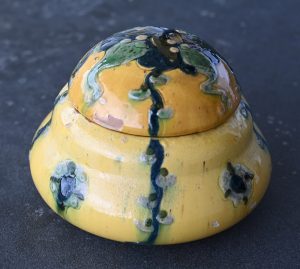
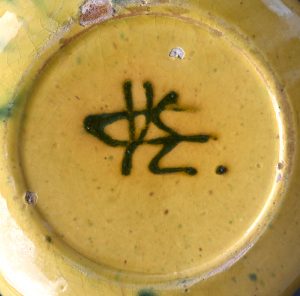
Works made after 1915 bear the mark “CVE”.
1916 Alongside the pottery instructor J. Hermanns, Clara exhibited ceramics at the Ferd. Wyss Kunstsalon (an art salon run by Ferdinand Wyss) in the lobby of the City Theatre in Bern (Das Werk: Architektur und Kunst = L’oeuvre : architecture et art, Vol. 3, 1916; XV).
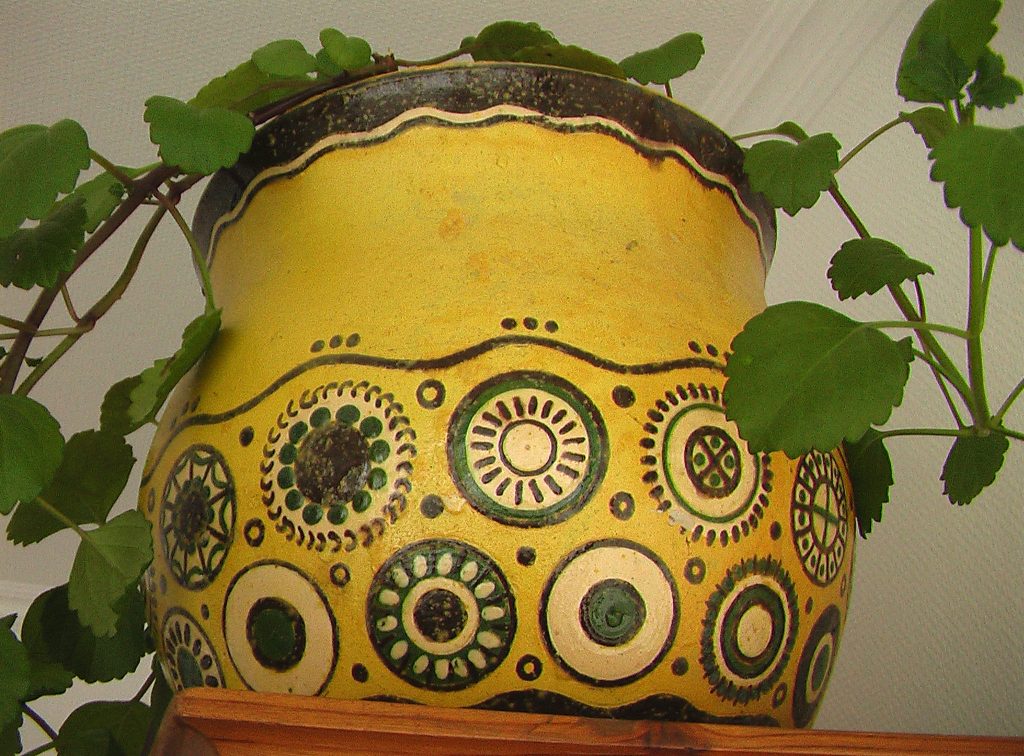
Flowerpot from the period around 1917, in family ownership.
1917 Clara participated in the XIII. Schweizerische Kunstausstellung (13th Exhibition of Swiss Art) in Zurich, exhibiting a very well-received flower-pot container in the applied arts section (Das Werk, Vol. 4, 1917, XIX).
1918 The Museum of Applied Arts in Zurich purchased one of her “pretty vases” (Schweizer Kunst = Art suisse = Arte svizzera = Swiss art 1918, 25).
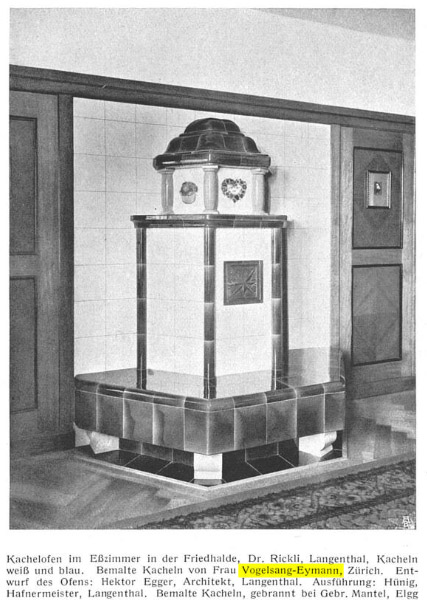
In 1919 she painted the tiles for a new stove for Dr Rickli on Friedhalde in Langenthal. The tiles were made by master stove fitter Hünig in Langenthal and fired by the company Mantel Bros. in Elgg (Das Werk : Architektur und Kunst = L’oeuvre : architecture et art, Vol. 6, 1919, 92).
In 1924 she displayed ceramics as part of the “Arts décoratifs” (Decorative Arts exhibition) in Neuchâtel (FAN – L’express, 27th November 1924).
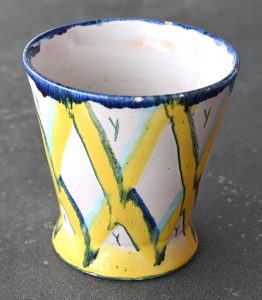
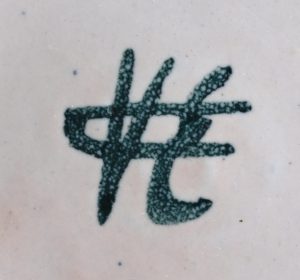
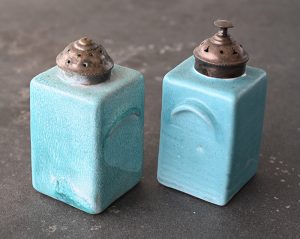
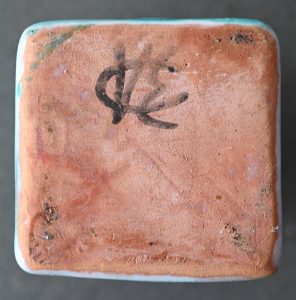
To date, only a small number of marked ceramic objects from the 1920s and early 1930s are known.
1925 On 13th October, the NZZ newspaper wrote: “The rooms of the Kunsthalle [in Bern] are decorated with works by the artists from the Swiss Society of Female Painters, Sculptors and Ceramicists. The jury has shown its expertise by setting an impressively strong course… Great strides have also been made in the ceramics department. I would like to remind readers of the beautifully made bowls and plates by G. Meister-Zingg, of Clara Vogelsang’s technically very accomplished jugs and bowls and of the pretty and practical cups and bowls entered by Adèle Schwander…”.
1925 Participation in the Christmas exhibition of the Bern section of the Schweizerischer Werkbund at the Museum of Decorative Arts in Bern (Neue Zürcher Zeitung, No. 2017, 17th December 1925).
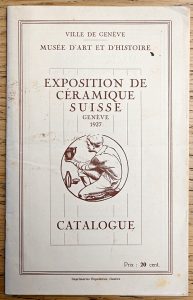
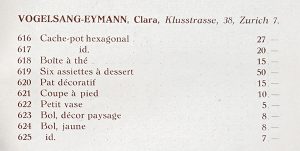
In 1927, Clara exhibited ceramic vessels at a large exhibition entitled “Céramique suisse” in Geneva (Review of the exhibition: Der Bund, Vol. 78, No. 395, 14th September 1927 Issue 02).
1927 Participation in the Christmas exhibition of the Werkbund at the Museum of Decorative Arts in Bern (Neue Zürcher Zeitung, No. 2173, 16th December 1927 Issue 02).
1928 Exhibition as part of Saffa – Swiss Exhibition of Women’s Work (Berner Tagwacht, Vol. 36, No. 218, 17th September 1928).
Clara had two children but lost her husband to tuberculosis as early as 1930. From then on, CVE, as she signed her works, dedicated her life to her passion for art. She drove her car around the locality and the wider region of the Upper Aargau to paint and to search for new motifs, either on her own or with other female artists. She also went on longer trips to Brittany, the island of Ischia, Egypt and Tunisia, bringing back sketchbooks, drawings and watercolour paintings.
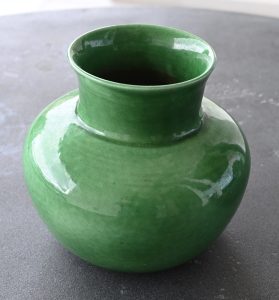
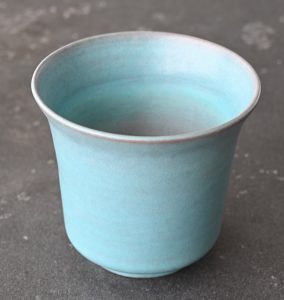
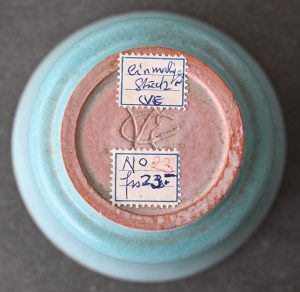
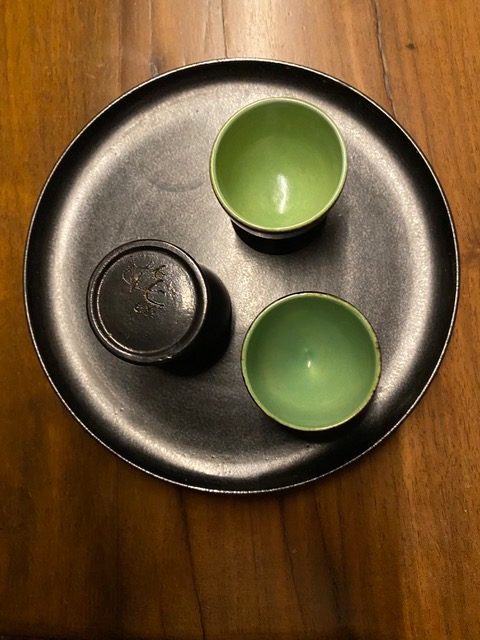
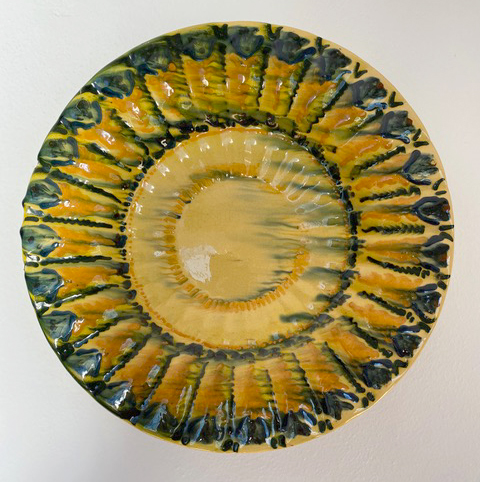
It is possible that these monochrome glazed ceramics were made in the 1930s or 1940s. It is not clear if they were made at the Haussmann workshop in Uster or if they date from before that time.
1930 At the Christmas exhibition of the Werkbund at the Museum of Applied Arts in Zurich, Clara Vogelsang-Eymann exhibited “attractive vases and bowls” (Neue Zürcher Zeitung, No. 2350, 3rd December 1930, Issue 03).
In 1932 she participated in the XIIth exhibition of the GSMBK in Neuchâtel and Geneva (Zeitschrift für schweizerische Archäologie und Kunstgeschichte 43, 1986, 452).
In 1940, she joined Amata Good, Fritz Haussmann, Margrit Linck-Daepp, Meister&Cie, Luise Meyer-Strasser, Hanna Nencki and Berta Tappolet in selling her wares at a Christmas exhibition organised by the Zurich section of the Schweizerischer Werkbund (Das Werk : Architektur und Kunst = L’oeuvre : architecture et art, 27, 1940, XXIV).
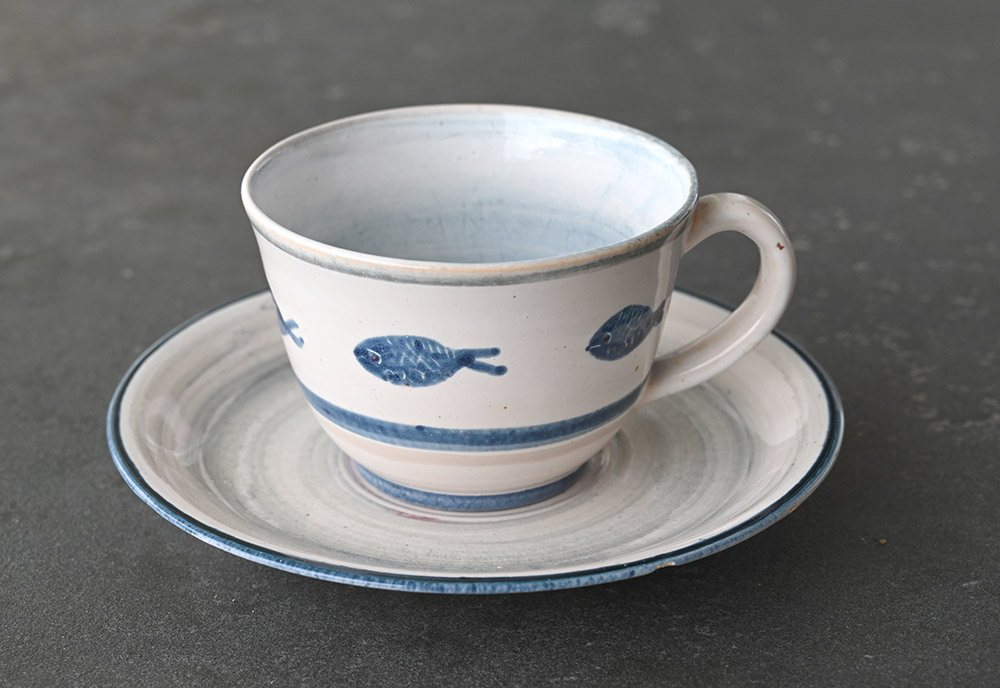
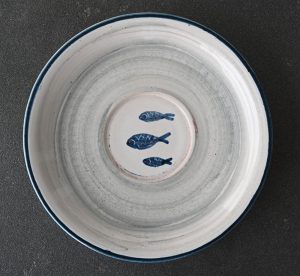
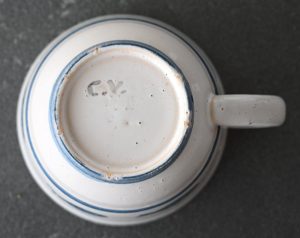
Cup produced by Haussmann/Uster, probably after the Second World War, painted by Carla Vogelsang-Eymann, marked “C.V.”.
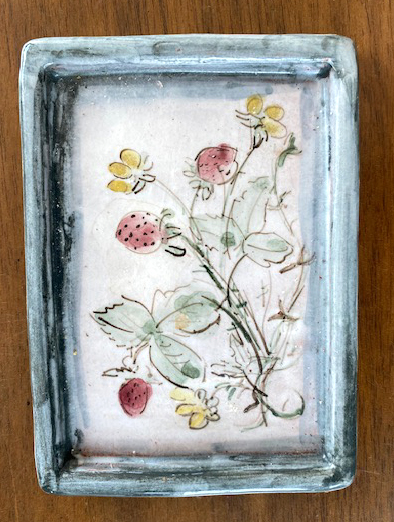
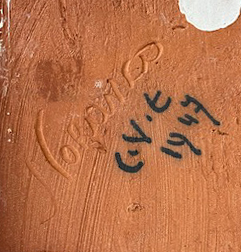
1947 These shallow dishes made by the pottery producer “Noranco” aus Pambio-Noranco bei Lugano were painted by CVE and dated 1947.
In 1955 she participated in an exhibition run by the Swiss Society of Female Painters, Sculptors and Ceramicists at the Strau-Hoff in Zurich exhibiting “finely painted bowls and dishes” (Neue Zürcher Zeitung, No. 3381, 8th December 1955).
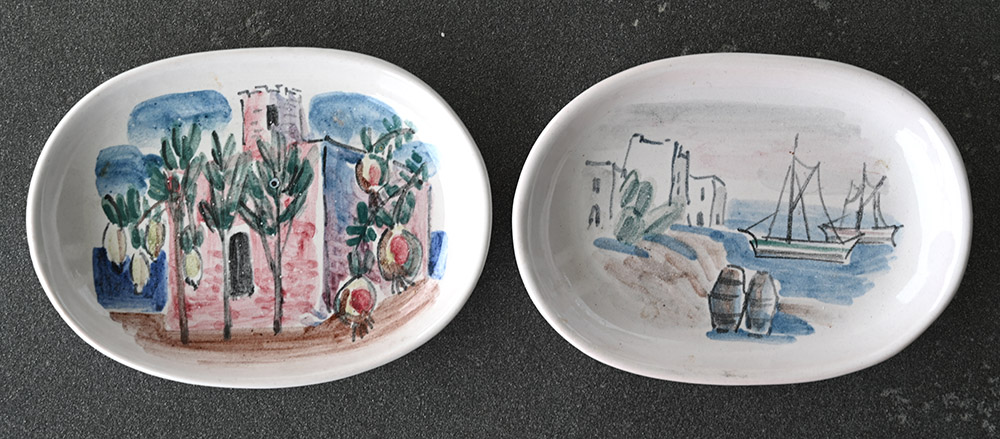
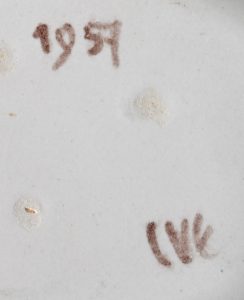
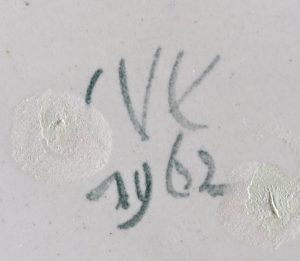
Her later ceramics appear to have included mainly in-glaze painted decorations on faience glaze, some of which reproduced sketches and images created during her visits to the Mediterranean region. An article in a magazine, unfortunately undated, tells us about this phase of her creative life.
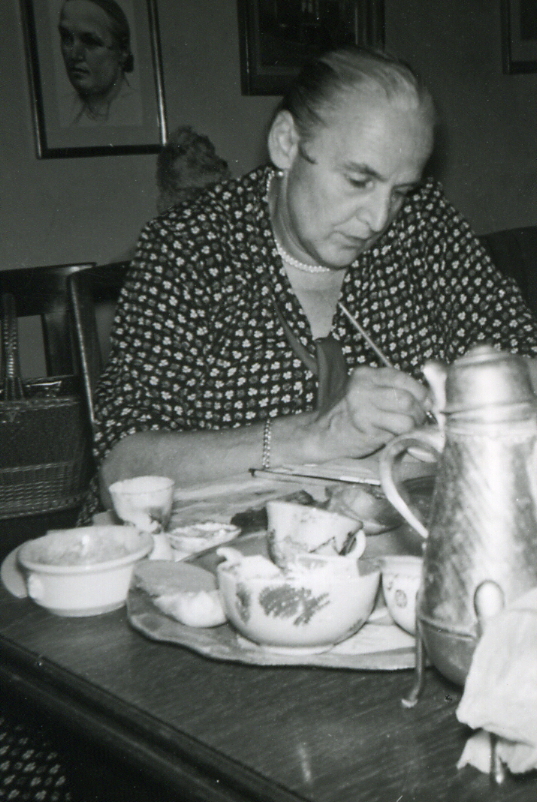
Clara Vogelsang-Eymann painting pottery.
In 1956 she exhibited “modern ceramics” at an exhibition run by the Lyceum Club in Bern (Schweizer Frauenblatt: Organ für Fraueninteressen und Frauenkultur, Vol. 38, 1956).
In 1958 Clara Vogelsang-Eyman participated in the XXIInd exhibition of the GSMBK as part of SAFFA in Zurich (Zeitschrift für schweizerische Archäologie und Kunstgeschichte 43, 1986, 453).
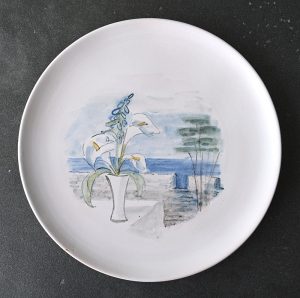
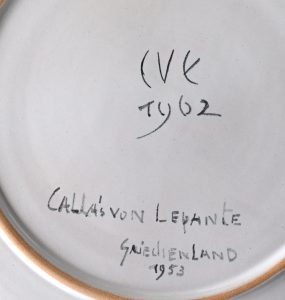
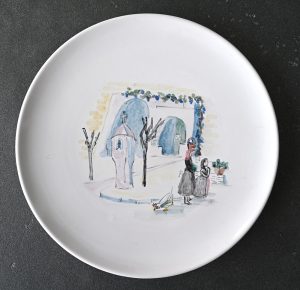
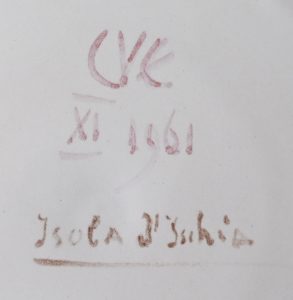
In 1965 her ceramics decorated with coastal scenes and motifs from Ischia were very well received when they were put on display as part of the Christmas exhibition at the Lyceum Club in Zurich (Schweizer Frauenblatt : Organ für Fraueninteressen und Frauenkultur Vol. 49 [i.e. 47], 1965, 4).
In 1970 her ceramics were exhibited alongside watercolours and jewellery at an exhibition curated by the Lyceum Club in Zurich, where they received were very favourably reviews (Schweizer Frauenblatt : Organ für Fraueninteressen und Frauenkultur, 52, 1970, 3).
1972 Various newspapers ran articles to celebrate Clara Vogelsang’s 80th birthday (Schweizer Frauenblatt : Organ für Fraueninteressen und Frauenkultur 54, 1972, 6).
Clara Vogelsang-Eymann was a very affectionate and lively hostess and, until her death in 1984, the door of her house in Zurich was always open to her artist friends and acquaintances from all over the world.
Note: Today, several of Clara Vogelsang-Eymann’s ceramics are housed at the Museum in Langenthal and will be recorded for CERAMICA CH in due course.
Catalogue of the special exhibition “Frauenpower – Starke Frauen aus dem Oberaargau” (2015/16) at the Museum in Langenthal;
Information provided by Anna Stuby (granddaughter of Clara Vogelsang-Eymann).
Translation Sandy Haemmerle

